India’s trade routes and intra-Asian ties flourished long before Europeans arrived, William Dalrymple outlines in The Golden Road.
If the 19th century was defined by European power, and the 20th century by the rise of the US, the 21st century is increasingly understood to be the “Asian Century” — one in which the global enter of gravity is shifting yet again. And if you accept that assertion, the next logical question is: Who will lead the Asian Century? The two natural candidates are the region’s historical powers, China and India, which were the world’s largest economies from 1 A.D. to 1820, before the rise of the industrial west. They are once again among the planet’s preeminent economies.
By most measures, China is currently outperforming India. Its $18.5 trillion GDP is more than four times larger than India’s, and it accounted for $6.64 trillion in global trade in 2023 — 11% of the global share, to India’s 2.7% ($1.64 trillion). Its military is mightier, and it has greater influence in international affairs. In 2013, China launched the Belt and Road Initiative, an attempt to revive the ancient web of trade routes, known as the Silk Road, that connected the Middle Kingdom to all parts west.
But in his masterful new work, The Golden Road (Bloomsbury, April 29), historian William Dalrymple argues that India has both the potential and the historical track record to catch up with its former peer to the northeast. Citing compelling evidence, Dalrymple notes that many of the great advances in human history originated from Indian civilization, particularly in mathematics (including the concept of zero), religion (Hinduism and Buddhism) and philosophy, astronomy, medicine, literature and art. He argues that the world overlooked India’s vast influence, and that trade routes emanating from India may have had an equally substantive impact on Asian and world history as the Chinese silk route.
India was “a crucial economic fulcrum, and civilizational engine, at the heart of the ancient and early medieval worlds,” Dalrymple writes, describing the country as “one of the main motors of global trade and cultural transmission.”
The Golden Road fills an important gap in our understanding of the intra-Asian relations that predated the arrival of European colonizers. While one modern conceit is that globalization is a recent development, the book demonstrates how much of Asia was for centuries connected through a common lingua franca, Sanskrit. Ideas of Hindu-Buddhist kingship and cosmology were prevalent throughout these regions; Buddhism also took root in Japan, Korea and Southeast Asia. In the Middle East, Indian ideas in mathematics and medicine led to further advances during the Islamic Golden Age. From the Arab world, these Indic concepts were transmitted to Europe, where they also helped spur the European Renaissance.
Dalrymple suggests the world overlooked India’s influence because it was “undermined, misrepresented and devalued” by Victorian Indologists such as Thomas Babington Macaulay. In 1835 Macaulay wrote that it would be “no exaggeration to say that all the historical information which has been collected from all the books written in the Sanskrit language is less valuable than what may be found in the most paltry abridgments used at preparatory schools in England.”
But that was then. To compete with Beijing now, New Delhi needs to develop economic muscle, though it can also draw a great deal of competitive soft power from the history of its “Golden Road,” the ancient routes that connected India to the rest of Asia and the wider world. Dalrymple outlines three ways for India to leverage its history to enhance its competitive position vis-à-vis China and stake its claim to leadership of the Asian Century.
The first is to rediscover the great virtues of openness to international trade. While India’s current economy may in relative terms be more closed than that of China, Dalrymple shows that India’s trade with the rest of the world matched, if not exceeded, that of China for millennia. This resulted in prosperity at home, which in turn enabled Indian culture to shine.
“In the crucial period between the end of antiquity and the onset of the high Middle Ages, you can make [a] case for India being the cultural and intellectual center of Asia, influencing and changing the course of religious, artistic and cultural life,” Dalrymple writes. “This after all was why [Chinese scholars] risked their lives to make the dangerous journey to what was then the Harvard or MIT of ancient Asia: the great Buddhist university of Nalanda.”
Many Indians believe that the country’s large domestic market means it doesn’t need international trade to grow faster. While few officials state this view out loud, the Indian government’s actions indicate an underlying belief in continued reliance on domestic consumption for economic growth, encouraging companies to focus on the Indian market rather than exports. India backed out of the Regional Comprehensive Economic Partnership in 2019, for fear of Chinese goods flooding the domestic market. It is in no hurry to enter into free-trade agreements with Western countries — despite long-standing negotiations with the UK and the European Union — apparently because it wants to protect sensitive sectors like agriculture, which employs close to half of the working population.
This is short-sighted. If China is leveraging the $100 trillion global economy to grow while India relies on its $4 trillion domestic market, India will remain at a disadvantage. Arvind Subramanian, former chief economic advisor to the Indian government, argued in a recent interview with the Financial Times, “You cannot do [it] based on domestic demand and a domestic market.”
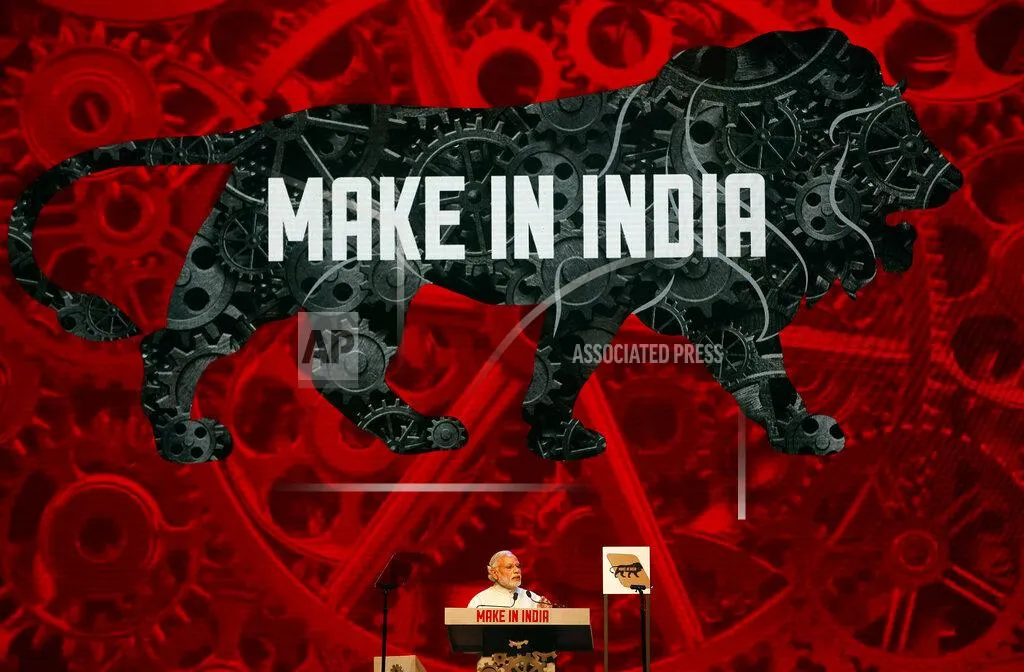
As for fears of being swamped by imports from China, a study by the Peterson Institute for International Economics shows that India’s economy would in fact gain $60 billion annually from more openness. It also makes economic sense to encourage foreign investment, particularly in the manufacturing sector. In theory, New Delhi’s ‘Make in India’ initiative — which encourages manufacturing in the country — is meant to do just this. In practice, it has been slow in encouraging investment.
The second takeaway for India’s current rulers from their country’s history is the importance of India’s traditional links with Northeast Asia. The most successful and dynamic economies of Asia are now found in that region, with Japan, South Korea and China outperforming the rest of the continent. As Dalrymple notes, a significant part of the DNA of their civilizations comes from India.
These days, there are deep suspicions between China and India, just as there are between China, Japan and South Korea. Geopolitical differences explain these suspicions, but their shared cultural history might help overcome them. While Dalrymple’s book pits India’s Golden Road against the China-dominated Silk Road, the way forward for both countries may well be a concomitant and cooperative revival of both ancient routes, repurposed for economic and scientific cooperation through the Global South.
China has launched its Health Silk Road initiative — through which it aims to improve international cooperation in health care — and India has been providing pharmaceuticals and medical equipment to the developing world at low or no cost, simultaneously sharing its expertise. At the height of the Covid-19 pandemic, when the West was reluctant to share vaccines with the Global South, China and India stepped up and filled the gap. There is great opportunity for them to continue to collaborate in enhancing health-care access, especially in the poorer countries of the Global South.
The third, and arguably best, opportunity for leverage in India lies in Southeast Asia, the region most influenced by Indian civilization, as Dalrymple documents in great detail. One of the curious anomalies in history is that even though Southeast Asia is geographically closer to China, nine of its 10 countries have an Indic cultural base, most obviously expressed in religious and cultural practices. Only Vietnam has a Sinic base.
That cultural base was built on economic ties. In the 4th and 5th centuries, when western supplies of gold dwindled due to the fall of the Roman Empire, Indian traders turned to Southeast Asia. Their ships sailed to what would eventually become Myanmar, Malaysia, Indonesia, Thailand, Laos, Vietnam and Cambodia. The traders also exported their faith, seeding Hindu and Buddhist kingdoms across the region. Few Indians today know that one of the strongest Hindu kingdoms in history emerged in Southeast Asia.
Although Hinduism is now a minority faith in the region, its cultural influence lingers: The Hindu epics Ramayana and Mahabharata are still performed in many corners of Southeast Asia. Buddhism is the largest of the major world religions in six of the region’s 10 countries. Given these ties, there should be a close cultural relationship between India and Southeast Asia matching the cultural closeness between Europe and the US. But no such closeness exists.
One reason is that India became part of the ‘Persianate World’ during the second millennium (as the historian Richard Eaton demonstrates in his writings) and turned away from Southeast Asia. Another reason is present-day India’s relative economic and political insularity, particularly in comparison to China.
If India is to provide leadership in the Asian Century, the most natural starting place would be Southeast Asia. And the first step would be to restore the close trading links of old. This would require catching up with China, no easy task. As of 2023, the most recent year for which definitive figures are available, Southeast Asia’s goods trade with China was $697 billion, almost seven times larger than that of India. But as recently as 1980, Indian goods trade with Southeast Asia was $1.3 billion, only half that of China’s.
India is expected to become the third largest economy in the world by 2030. Given that it was one of the poorest countries in the world upon achieving independence in 1947, this would be a remarkable achievement. But to create opportunities for its enormous population, it needs to do more. In that respect, Dalrymple’s book couldn’t be more timely. The Golden Road is not only a reminder of a glorious past; it can also inspire Indians to match the sterling record of their ancestors in engaging a new rejuvenated continent — and claim the leadership of the Asian Century.
The post History Shows How India Can Catch Up With China appeared first on VVDesigns.]]>Triphala Ras is an Ayurvedic herbal preparation made from a combination of three fruits – Amla (Emblica officinalis), Haritaki (Terminalia chebula), and Bibhitaki (Terminalia bellerica). These fruits are dried, powdered and mixed in equal proportions to create Triphala.
Triphala Ras is known for its numerous health benefits, including promoting digestion, detoxifying the body, improving vision, reducing inflammation, boosting the immune system, and promoting healthy skin. It is also believed to have anti-cancer and anti-aging properties.
In Ayurveda, Triphala Ras is considered a “rasayana,” which means a rejuvenator or tonic for the body. It is commonly used to support overall health and well-being and is believed to balance the three doshas – Vata, Pitta, and Kapha – which are the three fundamental elements that govern our physical and mental health.
Triphala Ras can be consumed in various forms, including as a juice, powder, or tablet. However, it is essential to consult with a healthcare professional before taking any herbal supplements, especially if you have any pre-existing medical conditions or are taking any medications.
Uses of Triphala Ras
1. Digestive Health: Triphala Ras is often used to promote digestive health and relieve constipation. It helps to regulate bowel movements and improves digestion.
2. Immunity Booster: Triphala Ras is also known to boost immunity and improve overall health. It contains high levels of Vitamin C and antioxidants that help to strengthen the immune system.
3. Eye Health: Triphala Ras is believed to improve vision and promote eye health. It is often used to treat various eye disorders and to prevent age-related macular degeneration.
4. Skin Health: Triphala Ras has anti-inflammatory properties that make it useful in treating skin conditions like acne, eczema, and psoriasis. It is also believed to have anti-aging properties that can help to keep the skin looking young and healthy.
5. Liver Health: Triphala Ras is believed to have a detoxifying effect on the liver. It helps to remove toxins from the body and improve liver function.
6. Respiratory Health: Triphala Ras is often used to treat respiratory problems like asthma and bronchitis. It helps to clear the airways and promote healthy lung function.
7. Weight Loss: Triphala Ras is believed to aid in weight loss by improving digestion and boosting metabolism. It is often used as a natural remedy for obesity.
It is important to note that while Triphala Ras has many potential health benefits, it should be used under the guidance of a qualified Ayurvedic practitioner to ensure safe and effective use.
you may also like Herbal Tea
The post Triphala ras and its benefits appeared first on VVDesigns.]]>Psoriasis is a chronic autoimmune disorder that affects the skin. It is a common condition that affects approximately 2-3% of the population. Psoriasis causes skin cells to grow at an abnormally fast rate, leading to the formation of thick, scaly patches on the skin. The exact cause of psoriasis is not known, but it is believed to be a combination of genetic and environmental factors.
Symptoms of psoriasis can vary in severity, and can appear anywhere on the body. The most common areas affected are the scalp, elbows, knees, and lower back. Symptoms of psoriasis can include:
– Red, scaly patc hes on the skin
– Itching or burning sensation
– Dry, cracked skin that may bleed
– Thickened, discolored nails
– Joint pain or stiffness
Psoriasis is a chronic condition, meaning that it cannot be cured, but it can be managed. Treatment for psoriasis typically involves a combination of topical creams, oral medications, and phototherapy. Topical creams, such as corticosteroids or vitamin D analogues, are often used to reduce inflammation and slow down skin cell growth. Oral medications, such as methotrexate or cyclosporine, may be prescribed for more severe cases of psoriasis. Phototherapy involves exposing the affected skin to ultraviolet light, which can help to reduce inflammation and slow down skin cell growth.
In addition to medical treatments, there are also lifestyle changes that can help to manage symptoms of psoriasis. Maintaining a healthy weight, avoiding alcohol and smoking, and managing stress can all help to reduce the severity of psoriasis symptoms.
Living with psoriasis can be challenging, both physically and emotionally. The visible symptoms of psoriasis can be embarrassing and cause self-consciousness, leading to anxiety and depression. It is important for individuals with psoriasis to seek support from family, friends, and healthcare professionals.

In conclusion, psoriasis is a chronic autoimmune disorder that affects the skin. While it cannot be cured, it can be managed with medical treatments and lifestyle changes. It is important for individuals with psoriasis to seek support and treatment in order to manage symptoms and improve their quality of life.
You can also read about Ayurvedic Herbal Tea.
The post Psoriasis and its Ayurveda Treatment appeared first on VVDesigns.]]>India is already a behemoth in the Medicine world thanks to the sheer volume of doctors it produces in comparison to the rest of the world’s numbers and it’s not just because of the population proportion either. However, if you dig deeper into history, India has actually always had a leading reputation in the field of medicine. It recognised the use of medicines for diseases far before anyone else in the world and even today, the basis of most modern medicines still boils down to the wisdom of Indian medical practices of years gone by.
In today’s list for the weary, we take a look at some of the biggest, most incredible contributions made by Indians in the field of Medicine.
I. Ayurveda
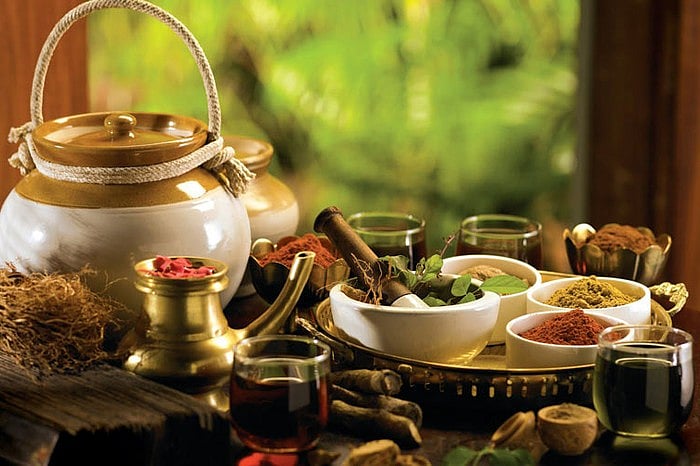
Also known as the science of longevity, Ayurveda is an ancient and traditional form of medicine that is not only prevalent today, but incredibly well-reputed and successful as well. The system of medicines is solely based on herbs and herbal compounds. Although Atreya and Agnivesa dealt with the principles of Ayurveda in 800 BC, Charaka Samhita is credited with the first Ayurvedic compilation. He was the first physician to posit the concepts of digestion, metabolism and immunity. He studied the human body and offered various remedies for numerous diseases.
Did You Know: A common misconception is that Indians use spices and herbs in their food to preserve it – however, this is only partly true. The herbs and spices actually form the basis of Ayurveda and were an effort to combine preventive medicine with everyday meals. Ayurveda dates back to 1st millennium BC, and laid the foundation for modern medicine.

II. Siddha
Now while Ayurveda was flourishing up north, the south of India couldn’t rely on it because herbs were not available all year long. Hence, the Siddha Saints came up with their own solutions in 5 BC – the Siddha medicines. Rich and simple, the Siddha medicines were made from a combination of everyday spices and fruits, while also using certain metals, minerals and chemical products for the same.
Did You Know: It was believed that preparations of mercury could provide the human body with immunity from decay. However, it is now an obvious fact that mercury consumption is fatal.

III. Surgery
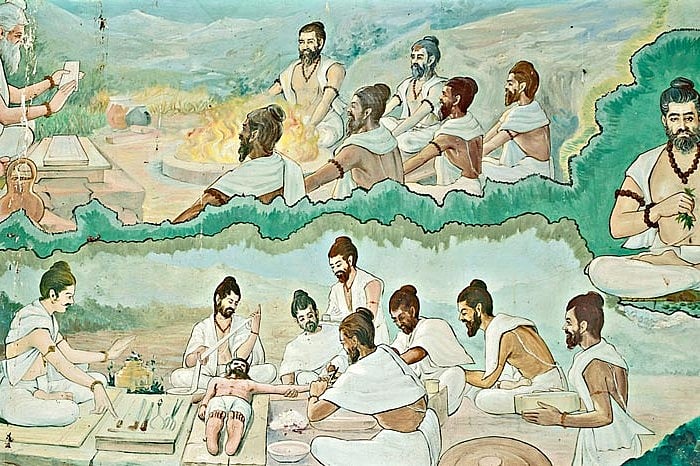
Aptly called the “Father of Surgery”, Susruta was a great Indian surgeon who is credited with the book Susruta Samhita. In the book, he is said to have described over 300 surgical procedures and about 120 surgical instruments (all his own inventions). He also classified surgeries into eight categories for a better understanding. In the books, he has described every form of surgery – from bones, to tissues to various organs as well. He has also described the symptoms of diseases and offered prognosis for the same. His work was eventually translated and reached the Arab world, from where it was then transported to Europe many years later.
Did You Know: He made use of ant heads to hold skin together when stitching and substituted what we know as anaesthesia with wine!
IV. Plastic Surgery
While it may seem like a modern invention, Plastic Surgery was actually being carried out in India by 2000 BC. The method, they say, is not dissimilar to the method used today. In fact, some of the instruments and tools for surgery described in the book are still being developed in the 21st century.
Did You Know: The purpose of it back then was not nearly as aesthetic or superficial, it was more about improvement of deformed body parts, most notably ears, noses and using skin from other body parts for the same was a norm back in the day as well.

V. Cure for Leprosy
There are two instances where the first ever cures for leprosy are mentioned, and incidentally, both are from India. Which one is more accurate, however, is debatable. While Kearns and Nash say that the first mention of the cure for Leprosy is in Susruta’s famous surgery book, Oxford claims that ritualistic cures for Leprosy were described in the Arth-Veda (way before 2000 BC), which was before Susruta’s time. Either way, one thing’s certain: the cure for Leprosy did in fact originate in India.
Did You Know: Leprosy was looked upon as a demonic curse that people were given for the longest time even in India before a treatment was found.

VI. Treatment of Visceral Leishmaniasis
In 1929, Upendra Nath Brahmachari discovered Urea Stibamine, a treatment for Visceral Leishmaniasis, more commonly known as black fever. Due to his discovery, he was nominated for the Nobel Prize in Medicine. Although he failed to win the award, his discovery has led to the complete eradication of Black Fever throughout the world, with the exception of very few underdeveloped nations.
Did You Know: In India, Black Fever came to be known as the disease of the poor, seemingly only existing in the lower class communities where basic amenities and hygiene were lacking. This was largely because the single-room, thatched mud huts that the agricultural labourers inhabited offered a perfect breeding ground for the sand flies, which lay their eggs in the crevices found in the mud walls and flourish in the huts’ high humidity environment, especially during monsoon season.

VII. Yoga
This might seem like an odd pick for a medical contribution but considering it is one of the most life-affirming practices that exist, we believed it deserved a spot. Yoga is the first form of exercise known to man. It was practised in order to stay fit, and to achieve peace of mind hence prolonging the health of the body.
Combining various Asanas and self-discipline, the aim of Yoga was to relieve the body of stress while also maintaining the overall fitness of the body. Yoga has gained immense popularity in recent years, is practiced worldwide, and thus, it has benefitted the world on the whole.